
The short answer
A flat roof isn't really flat. It's built with a gentle slope so water runs to a drain, scupper or gutter. Most flat roof problems come from water that stays put: ponding, clogged drains and scuppers, and seams or flashing that have opened up. We repair, recover or replace low-slope roofs using modified bitumen (torch-down), built-up hot mop, or white reflective membranes and coatings, depending on what your roof needs.
Where you'll find low-slope roofs in Orange County
Many homes with a tile or shingle roof also have a flat section. The most common spots:
- Patio covers attached to the back of the house.
- Garages and carports, attached or detached.
- Room additions and enclosed porches added after the house was built.
- Flat sections behind parapet walls on Spanish-style and modern homes.
- Small commercial buildings, where the whole roof is often low-slope.
Because you can't see them from the ground, small problems on them often turn into ceiling stains.
Modified bitumen and torch-down roofing
Modified bitumen is asphalt blended with modifiers that keep it flexible, made into rolls. "Torch-down" is the most familiar way to install it: the roofer heats the underside of the roll so it melts and bonds to the layer below, and the seams are overlapped and fused together. Some modified bitumen products are self-adhered or set in adhesive instead, which avoids an open flame in tight spots near walls, wood trim and vents.
- Strengths: a tough, flexible sheet with fused seams; handles light foot traffic for maintenance; a common, well-understood system that's straightforward to repair later.
- Trade-offs: torch work has to be done carefully around anything that can burn; a dark surface gets hot in the sun unless it has a reflective cap sheet or coating.
Built-up (hot mop) roofs
A built-up roof is the traditional Southern California flat roof. Layers of roofing felt are mopped together with hot asphalt, building up a thick, layered membrane. It's finished with a cap sheet, gravel or a reflective coating to protect it from the sun.
- Strengths: several layers instead of one, so a scuff on the surface isn't a hole in the roof; a long-established method that builders and inspectors know well.
- Trade-offs: heavier than single-ply systems; the hot asphalt has a noticeable smell while it's applied; needs a crew set up for hot work.
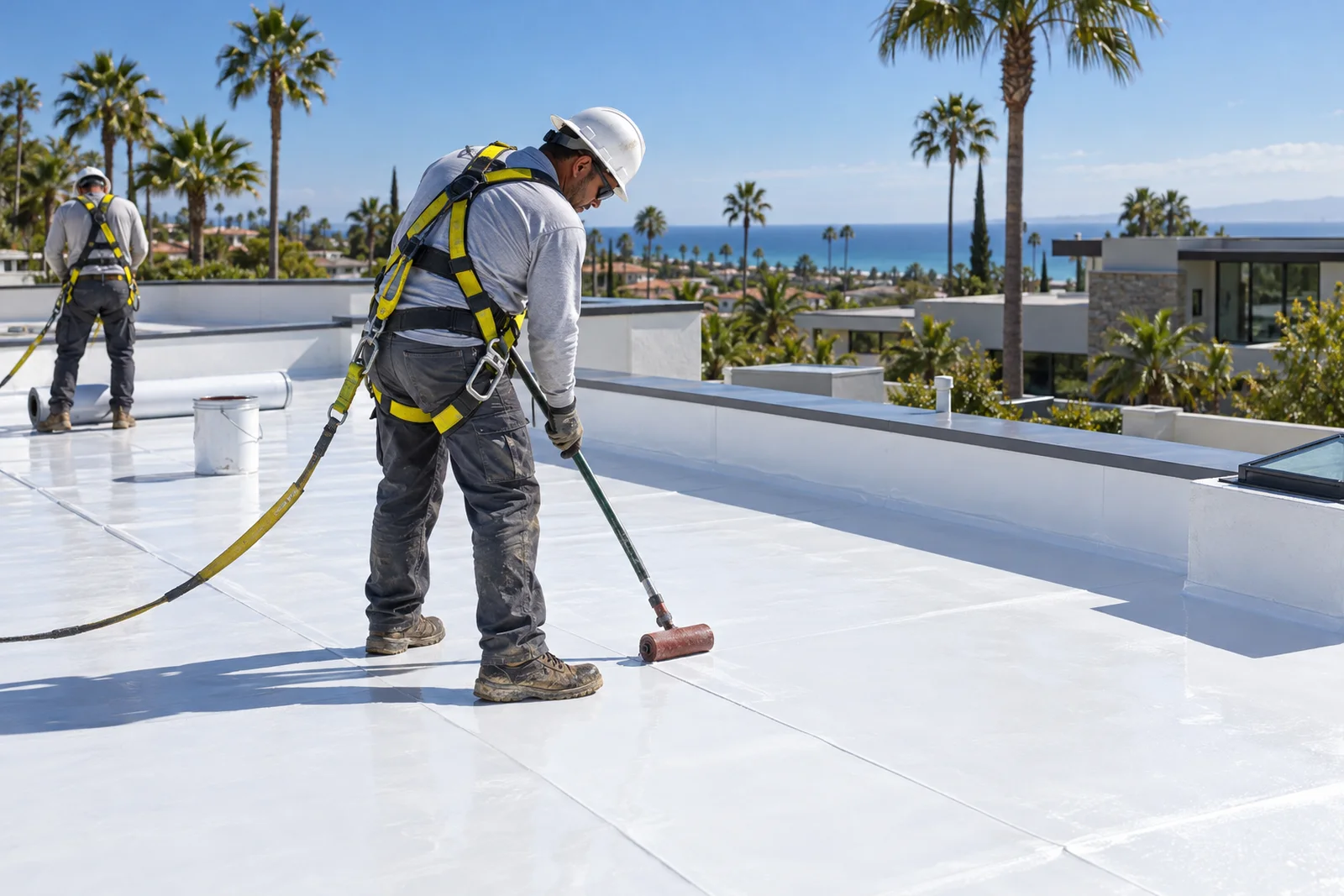
White reflective cool-roof membranes and coatings
A white or light-colored roof reflects much of the sunlight that a dark roof soaks up, so the roof surface stays cooler. On a low-slope roof right over a bedroom, an addition or a garage, that can make the space below more comfortable. There are two main ways to get there:
- Reflective membranes. White single-ply sheets, such as TPO and PVC, with seams welded with hot air, or a reflective cap sheet on a modified bitumen roof.
- Reflective coatings. A liquid coating rolled or sprayed over a sound existing roof, which renews the surface and reflects the sun.
A coating is not a cure-all. It needs a clean, dry, sound roof underneath, and it won't fix wet insulation, a rotted deck or a roof that's failed. Where water sits, the coating has to be one made for that. We'll tell you plainly whether your roof is a good candidate. If you're re-roofing, we help you meet California's cool-roof rules where they apply.
Ponding water: why it matters
Ponding is water that sits on the roof long after the rain has stopped. Low-slope roofs are meant to drain, and standing water works against them: it adds weight, speeds up wear on the surface, finds any weak seam, and leaves behind dirt and debris that hold moisture.
Common causes include a deck or framing that has sagged, clogged drains, a scupper set higher than the roof around it, low spots left by old patches, and roofs that were built with too little slope to begin with. Depending on the cause, the fix might be clearing and resetting drains, repairing a sagging deck, adding tapered insulation or a cricket to steer water toward the drains, or adding a drain or scupper where the water collects.
Drains, scuppers and gutters
Water leaves a flat roof through interior drains, through scuppers (openings in a parapet wall), or over the edge into gutters and downspouts. A lot of flat roof leaks start right here: roofing pulling away from a drain, a clogged strainer, a rusted scupper box, or a joint that was only ever sealed with caulk. We clean, re-flash and replace drain parts and scupper boxes, and make sure the roofing ties into them so water has a clear path off the roof.
Before the rainy season, clear leaves and debris from drains, scuppers and gutters, or have them checked during a roof inspection.
Patio, garage and addition roofs
The weak spot on most patio, garage and addition roofs is where they meet something else: the wall of the house, a parapet, or the edge of a sloped tile or shingle roof. That joint needs proper flashing, and it's where we look first when a low-slope roof leaks. When an addition ties into a tile roof, the repair often involves both, which is why we handle tile roofs as well.
Signs your flat roof needs attention
- Water still standing on the roof well after the rain stops.
- Blisters, bubbles or wrinkles in the roofing.
- Cracking or crazing in the surface or the coating.
- Seams or edges that are lifting or peeling back.
- Granules from the cap sheet washing into gutters and drains.
- Soft or spongy spots underfoot.
- Stains on the ceiling under a patio, garage or addition roof.